Spray foam removal, starting with a free loft inspection.
Updated
Spray foam removal takes sprayed insulation off the underside of your roof so the timbers can be seen, checked and ventilated again. We start with a free loft inspection and a written report, so you know exactly what you have before anything comes out.
- Free loft inspection
- Written report and photos you keep
- Written quote before any work starts
- Foam typeOpen cell or closed cell
- CoverageWhere it is and how much
- TimbersCondition where visible
- VentilationAirflow at eaves and ridge
- Next stepOur recommendation in plain English
 9.93/1010-year written guaranteeFree drone and CCTV surveysLeaks treated as a priority
Who we help.
Pick the one that sounds most like you.
Your buyer's surveyor or lender has flagged the foam. We arrange the inspection as soon as we can, put the findings in writing and give you a clear plan to keep the sale moving.
Schedule a call backSigns you may need spray foam removal.
- A surveyor has flagged itA home survey or valuation mentions spray foam and says the roof timbers couldn't be inspected.
- Your lender has raised itA lender has asked questions about the foam, or for a specialist report, before going ahead.
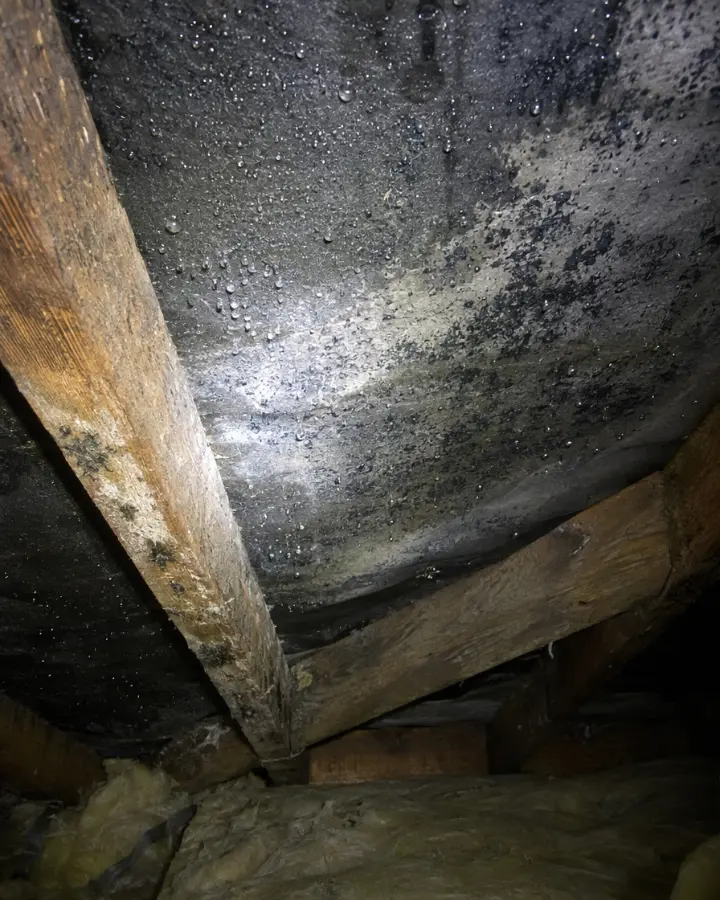
- Damp or condensationWater droplets, dark staining or damp timber in the loft, often worse in winter.
- A musty smellA lingering smell in the loft or upstairs rooms can point to moisture behind the foam.
- Foam pulling awayGaps, cracks or foam that has shrunk back from the rafters, letting cold air and moisture in.
- A leak you can't traceWater is getting in but there's no obvious cause. Foam can hide exactly where the roof is failing.
Why homeowners remove spray foam.
- Lenders and surveyors flag itWhen foam covers the rafters, a surveyor may not be able to see the condition of the roof. Some lenders may then ask for more information before they decide.
- It can trap moistureIn some roofs, foam sprayed straight onto the felt or tiles stops air moving. Moisture can then sit against the timbers and cause rot over time.
- It hides the roofSlipped tiles, torn felt and failing battens stay hidden behind the foam. Removal lets you see the roof and fix small problems before they grow.
What's in your inspection report.
Every inspection ends with a written report you keep. It is written for you, not for us, so it avoids jargon and shows the photo behind each finding.
- Foam typeOpen cell or closed cell, and how it was applied
- LocationRafters, felt, tiles, gable walls or loft floor
- CoverageApproximate area covered
- Timber conditionWhat we could see, and any signs of damp or rot
- VentilationWhether air can move through the roof space
- Roof coveringsAnything we noticed about tiles, slates or felt
- RecommendationWhat we suggest, in plain English
- PhotosDated photos of every area we inspected
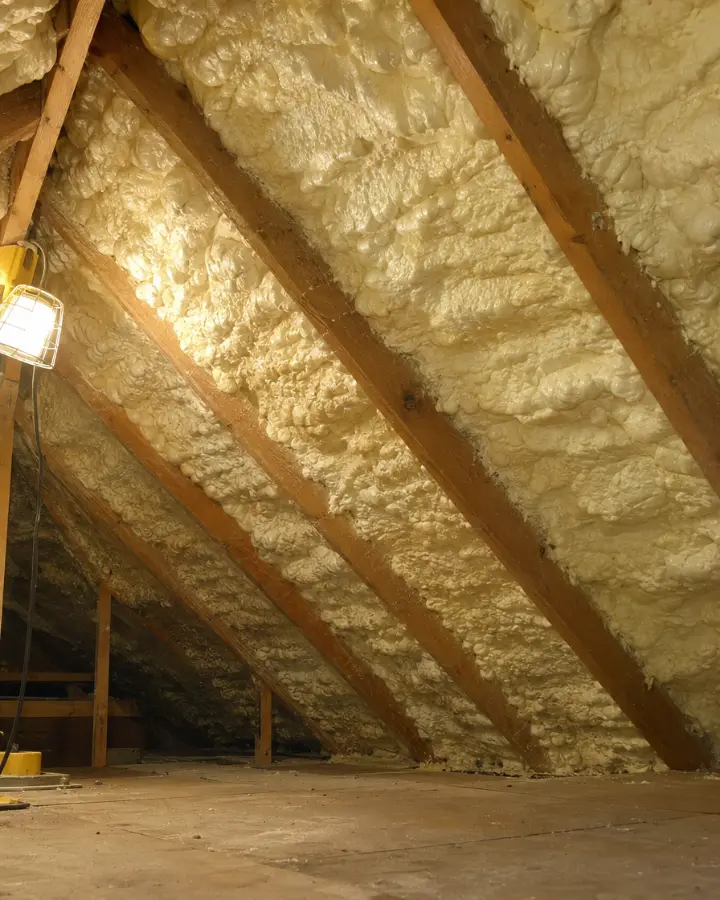 1Foam on rafters, rear slope2Staining at the eaves3Foam bonded to the felt
| Foam type | Closed cell, sprayed onto the feltNoted |
| Coverage | Both slopes, ridge to eavesNoted |
| Timbers | Staining at two rafter feetCheck |
| Ventilation | Eaves blocked by foamCheck |
| Roof covering | Tiles sound in the drone photosSound |
The spray foam we remove.
Soft and spongy. It holds moisture more readily, so we check the timbers behind it closely once it's off.
Hard and rigid, and it bonds firmly to timber and felt. It takes more care to remove without damaging the roof.
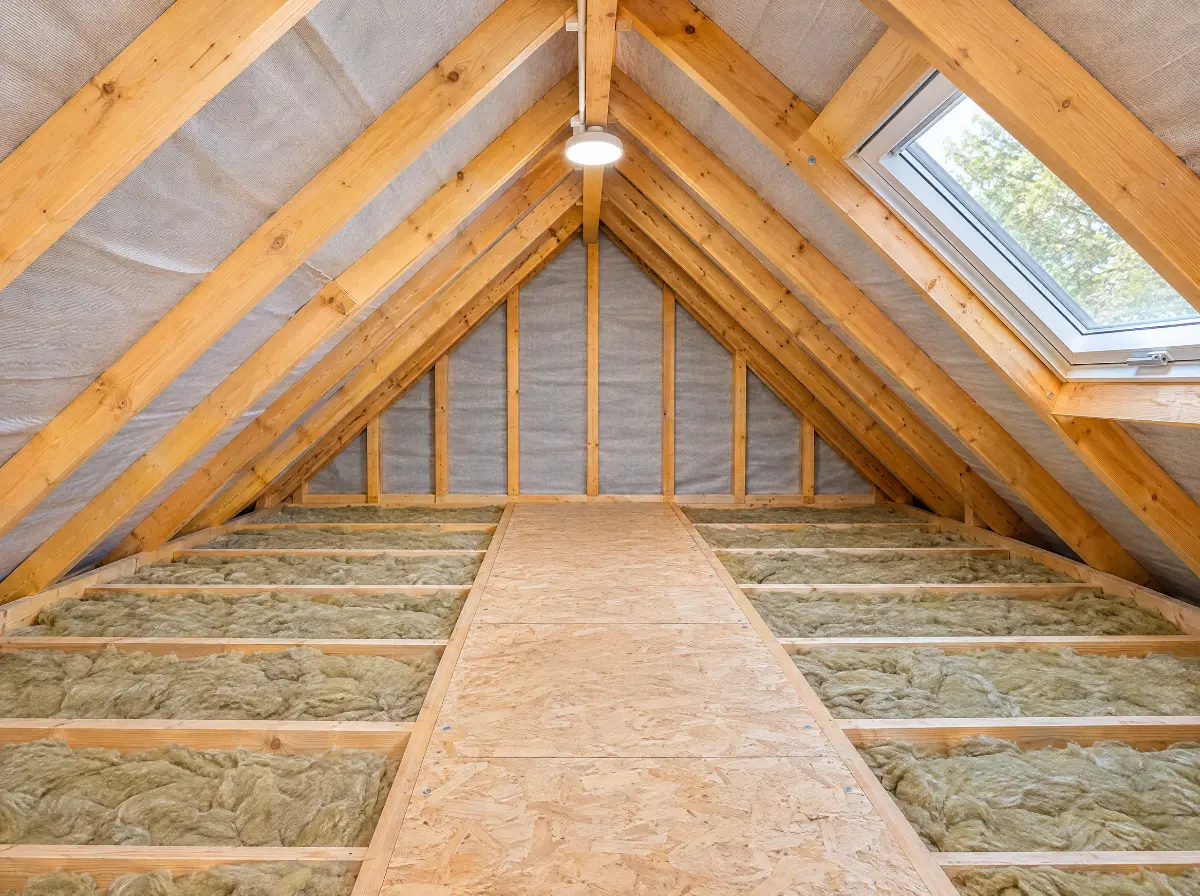
Patchy foam left behind by a previous job. We clear what's left and record the finished roof in photos.
How spray foam removal works.
- 1Step 1Free loft inspection
We look at the foam, the timbers we can see and the ventilation, and take photos as we go.
- 2Step 2Report and written quote
You get a plain-English report with photos, our recommendation and a written quote. Nothing is agreed until you're happy.
- 3Step 3Careful removal
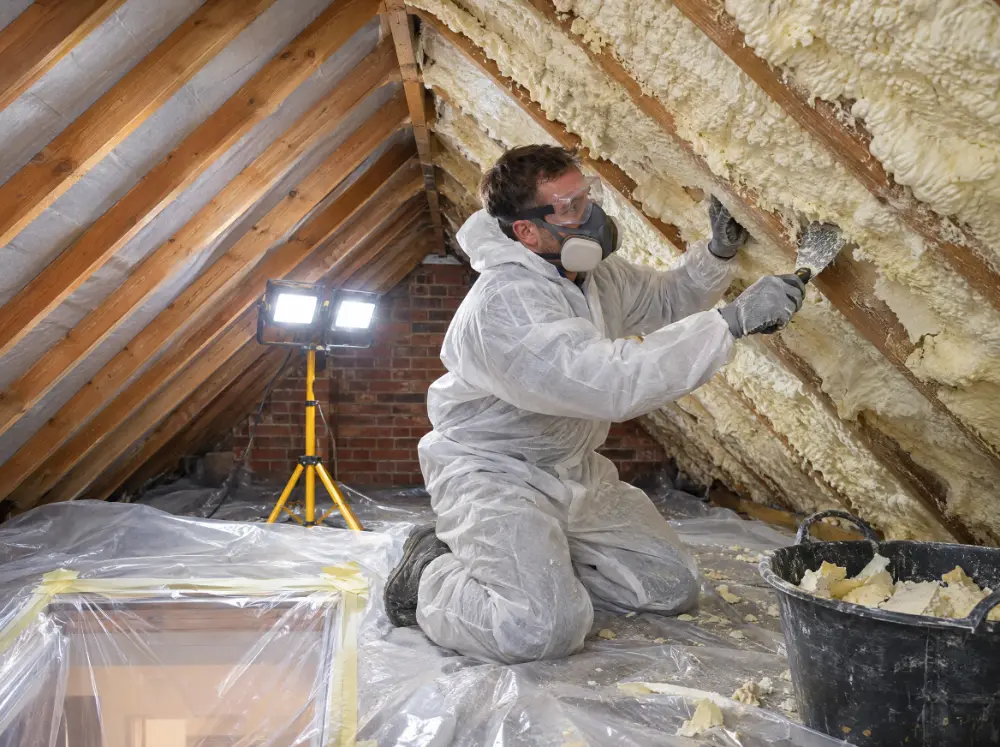
We protect your home, take the foam off the roof timbers and felt, bag it and remove it from site.
- 4Step 4Before-and-after photos
We photograph the cleared roof so you can share it with your surveyor, lender or buyer.
Spray foam removal explained.
Spray foam insulation is a polyurethane foam sprayed onto the underside of a roof, between and over the rafters. Many homes had it fitted as a quick way to save energy. It sets within minutes and covers the timbers, the felt and sometimes the back of the tiles.
The trouble is what it hides. In a Property Care Association survey, specialist surveyors found at least one defect linked to the foam in 35% of more than 500 homes inspected. RICS says surveyors may ask for an independent specialist report when they find spray foam, and that its presence can affect their opinion of value.
Not every loft needs the same answer, so we never start with removal. We start with a free inspection. We look at the type of foam, where it has been sprayed, how much there is, what we can see of the timbers and whether the roof can breathe. You get the findings in writing with photos, and a written quote if we recommend removal.
On the day, we protect the loft hatch, the landing and anything stored in the roof space. We then take the foam off the rafters, battens and the underside of the felt or tiles, working carefully so the roof covering isn't damaged. The foam is bagged and taken away from site.
Because we are roofers as well as spray foam removers, we look at the roof itself once it's clear. If we find a damaged batten, torn felt or a slipped tile, we show you the photo and put any repair in a written quote.
When the work is finished, you get before-and-after photos of every area to share with your surveyor, lender or buyer. Each lender sets its own rules, so nobody can promise a lending decision, but you will have clear evidence of what was done.
Our work comes with a 10-year written guarantee.
See the difference. Hear it from them.
out of 10 · 5 reviewsBeforeAfterThe removal of badly installed foam insulation revealed damage that could only be properly fixed by replacement of the membrane and cracked tiles etc. Archie and his crew were quick, professional and responded well to all my questions and suggestions. Possibly not the cheapest but a job well done. Thank You John
→Finished jobs, with the photos.
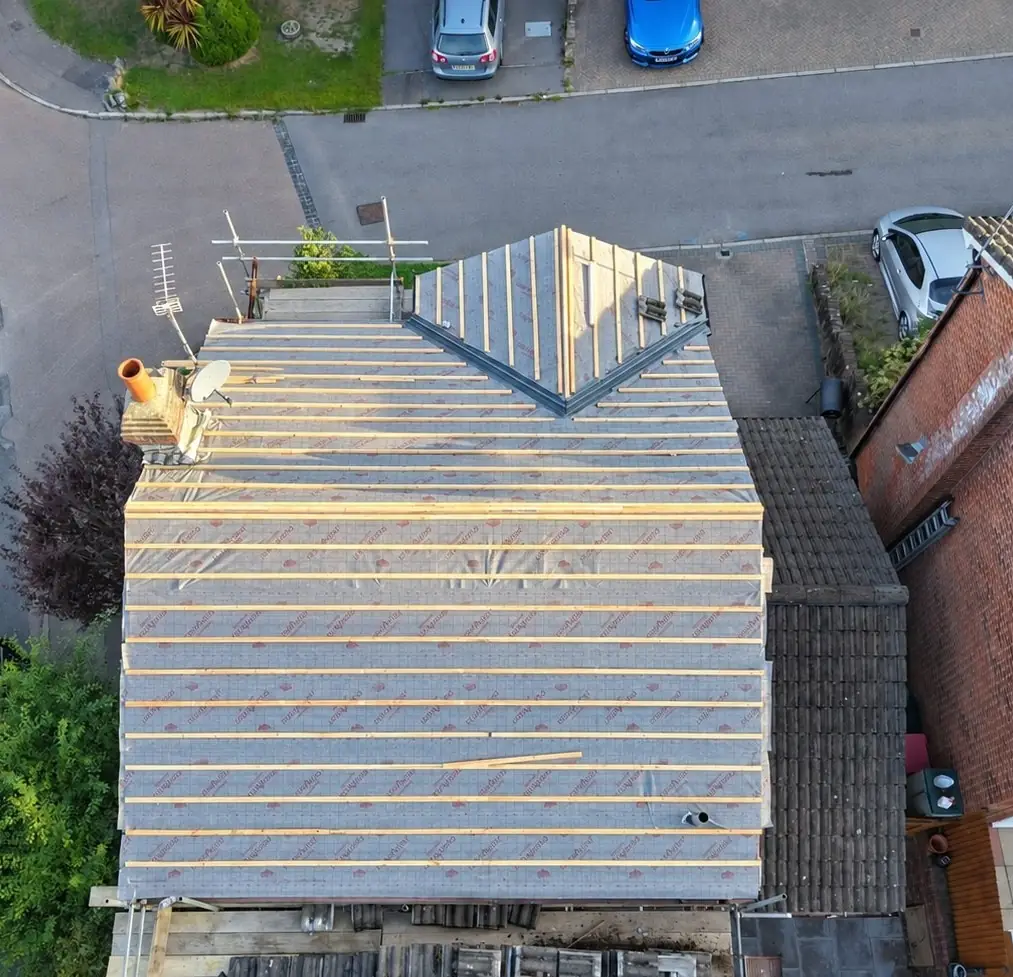
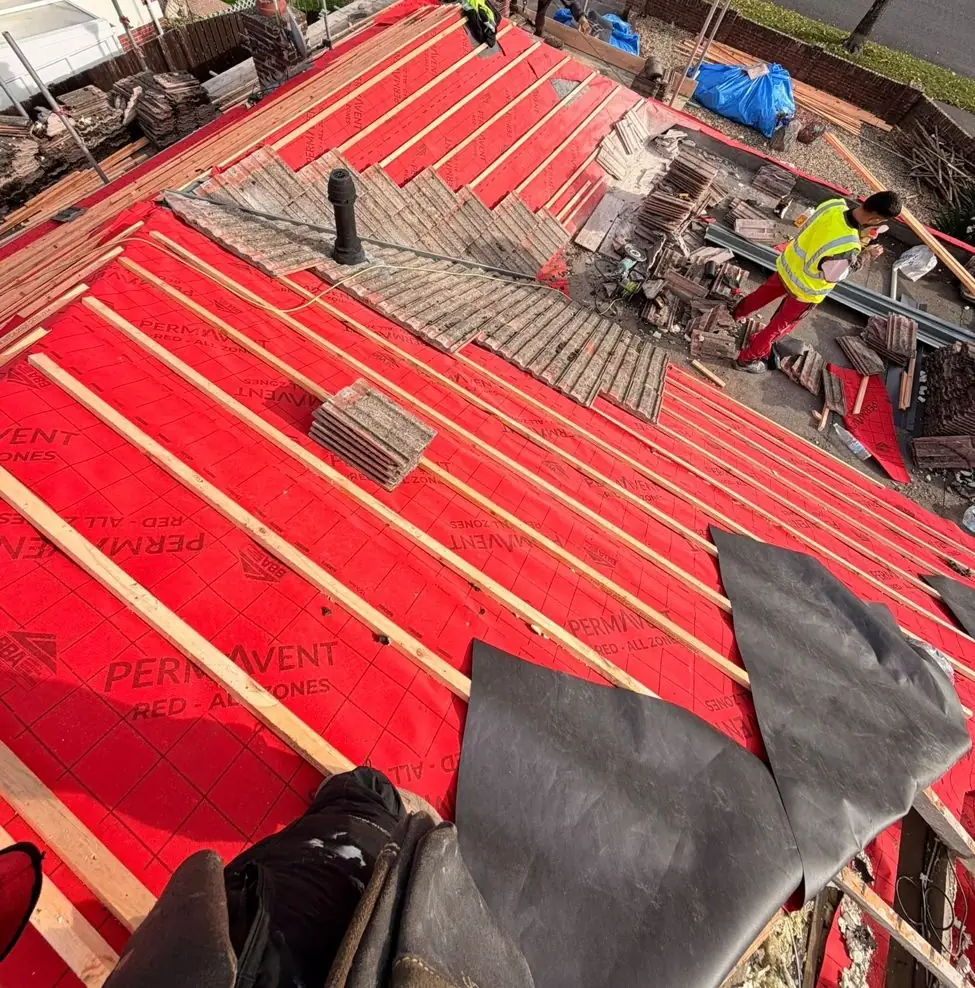
Spray foam questions.
Anything else, just call. You'll speak to someone who knows roofs.
Call us07888 868356Can I remove spray foam insulation myself?
We wouldn't recommend it. Closed-cell foam bonds hard to timber and felt, and scraping it off from inside a loft can tear the felt or crack tiles. The work is dusty, awkward and slow. We photograph every stage, so you have a record to show a surveyor or lender.
Why are people removing spray foam insulation?
Often because it can complicate mortgages and house sales. When foam covers the rafters, a surveyor may not be able to check the roof, and some lenders ask for more information before deciding. Some foam also traps moisture against the timbers, which can lead to rot. Removing it lets the roof be seen, checked and ventilated again.
Can I get a mortgage if I have spray foam insulation?
Sometimes, but it depends on the lender, the type of foam and how it was installed. Lender policies vary and change: some may accept it with a specialist report, and some may ask for more, such as removal. Speak to a mortgage broker early. A written inspection report gives them facts to take to lenders.
How long does spray foam removal take?
How long removal takes depends on the size of the loft, the type of foam and how easy it is to reach. Closed-cell foam usually takes longer than open-cell foam. We give you a clear timescale in writing after the free inspection, before you agree to anything.
Will removing spray foam damage my roof?
It shouldn't, when it's done with care. Closed-cell foam in particular needs patience, because it bonds to the felt and battens. We work slowly around the roof covering and photograph each area. If we find damage the foam was hiding, we show you the photo and quote for any repair in writing first.
What happens to the roof after the foam is removed?
Once the foam is off, we check the timbers, battens and felt and take before-and-after photos. If the roof needs any repairs, we explain why and give you a written quote. You may want to re-insulate the loft floor with a breathable material afterwards.
Where this information comes from.
- RICS consumer guide: spray foam insulation
- Property Care Association: inspection protocol for sprayed foam insulation
- House of Commons Library: spray foam insulation and mortgages (CBP-10658)
- Yorkshire Evening Post: Property Care Association survey finds defects in 35% of homes with spray foam
General information, not legal, financial or mortgage advice. Lender, insurer and council rules vary and change, so check with them or a qualified adviser.
You might also need.
A free loft survey with a written report and photos you keep.
Find out more →Spray foam and mortgagesWhat to do if a lender or surveyor has flagged spray foam.
Find out more →Drone roof surveyFree drone photos of the outside of your roof.
Find out more →Roof repairSlipped tiles, torn felt and leaks, fixed and photographed.
Find out more →Start with a call back.
We'll tell you what's in your roof, show you the photos and put it all in writing. There's no obligation, and nothing is agreed until you're happy.