Blocked drain cleared, and the cause found.
Updated
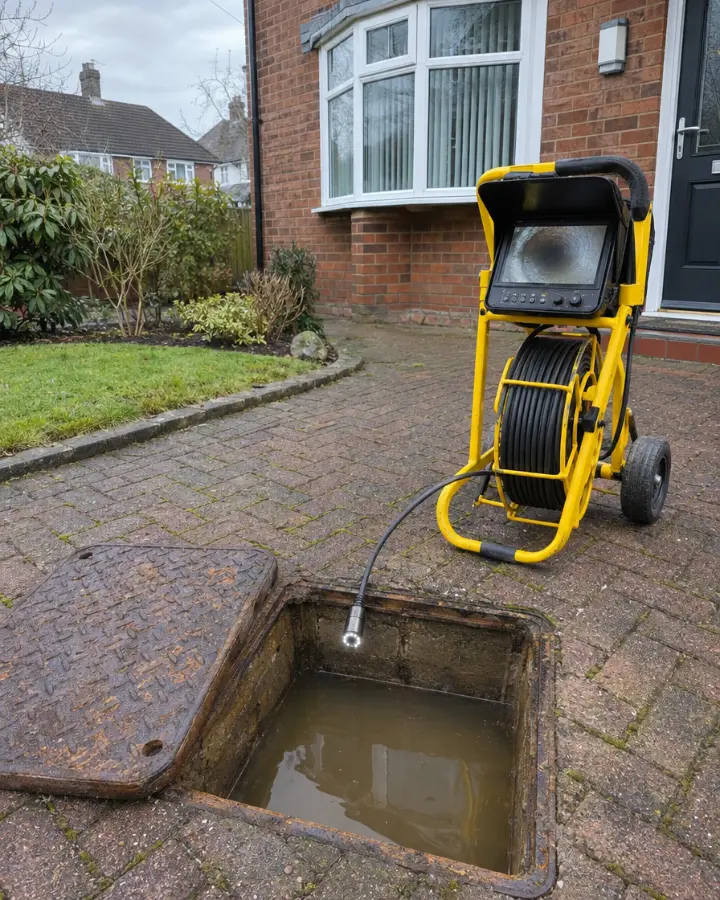
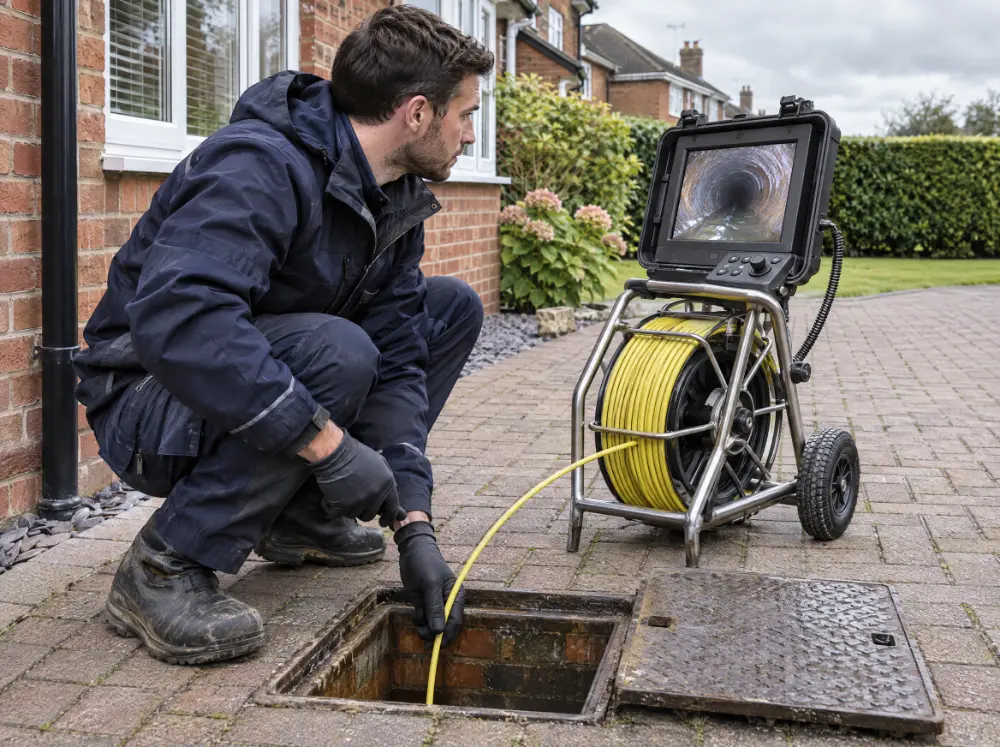
We clear blocked drains, toilets, sinks and outside gullies, then put a camera down the pipe to show you why it blocked. That way you fix the cause, not just this blockage.
- Blockages cleared with rods or water jetting
- Free CCTV check of the cause
- Written price before any repair
- BlockageFat and wipes
- PipeSound
- AdviceClear, no repair
 9.93/1010-year written guaranteeFree drone and CCTV surveysLeaks treated as a priority
How blocked drains show themselves.
- Water draining slowlySinks, baths and showers taking longer to empty.
- Gurgling noisesAir pushed back up through the plughole or toilet.
- A bad smellSewage smells inside or by an outside drain.
- Toilet risingThe bowl fills up before it drains away.
- Overflowing gullyWater pooling around the drain outside.
- A lifted chamber coverWaste backing up into the inspection chamber.
How we clear a blockage.
For simple blockages close to a sink, toilet or gully.
Scours out fat, scale, silt and built-up debris.
Cuts back roots that have pushed in through joints.
From blocked to clear.
- 1CallTell us the symptoms
What is blocked, and since when.
- 2ClearWe clear it
Rods, jetting or root cutting, whichever fits.
- 3CameraWe find the cause
CCTV footage of the pipe, shown to you.
- 4AdviceStop it coming back
Plain advice, and a written price if it needs a repair.
Why blocked drains keep coming back.
Most blockages are caused by what goes down the drain. Fat and cooking oil set hard in a cold pipe. Wet wipes, which are sold as flushable but do not break down like toilet paper, catch on joints and gather everything behind them. Hair and soap build up in shower wastes. Leaves and silt wash into outside gullies.
Some blockages are caused by the pipe itself. Tree roots find their way in through tiny gaps at the joints and grow into a mat that catches waste. Older clay pipes crack and shift. A dip in the pipe lets water sit and debris settle. In many homes built from the 1950s to the 1970s, pitch fibre pipes were used, and these can soften and lose their shape over time.
If a drain blocks once, clearing it is often all it needs. If it blocks again, the cause is usually in the pipe. That is why we follow every clearance with a camera check: you see what caused the blockage and whether the pipe is sound, so you are not paying for the same call-out every few months.
Things to try before you call.
For a slow sink or shower, take out the plug or waste cover and remove any hair or debris you can reach. A plunger can shift a blocked toilet or sink. Pouring very hot, not boiling, water down a greasy kitchen sink sometimes helps. Avoid strong chemical drain cleaners, which can damage older pipes and are dangerous if they splash back.
If more than one fitting is affected, water is rising outside, or you can smell sewage, the blockage is further down the system. That needs clearing from a chamber or gully with proper equipment, so call us rather than keep plunging.
Shared drains and the water company.
If the blockage is in a drain shared with neighbours, or in the sewer beyond your boundary, it is usually the responsibility of your local water company. Our camera survey shows where the blockage is, and the footage gives you something clear to send them.
What affects the cost of clearing blocked drains.
You get a price before we start. These are the main factors.
- Where the blockage is
- Near a fitting, or deep in the main run.
- What caused it
- Fat and wipes clear quickly, roots take longer.
- Access
- Whether there is a chamber or gully we can work from.
- Repairs needed
- If the pipe is damaged, a repair is quoted separately.
 out of 10 · 5 reviews
I cannot speak highly enough of Clearline Roofing & Drainage. From the very first call through to the final tidying up, the whole team were absolutely excellent — professional, polite, punctual, and a credit to their trade. We had a combination of roof repairs and drainage issues needing attention, and they handled everything with real expertise and care. They took the time to explain exactly what work was needed, kept us fully informed…
Blocked drain questions.
Anything else, just call. You'll speak to someone who knows roofs.
Call us07888 868356How do I know if my outside drain is blocked?
Look for water pooling around a gully, a smell of sewage near the house, or waste visible when you lift the inspection chamber cover. Inside, several fittings draining slowly at once, or a toilet that gurgles when the bath empties, usually means a blockage further down the drain rather than in a single waste pipe.
Are flushable wipes safe to put down the toilet?
No. Wipes labelled flushable do not break down the way toilet paper does. They catch on pipe joints and roots, gather fat and other waste behind them, and are one of the most common causes of blocked drains. Put wipes, cotton buds and sanitary products in the bin instead of the toilet.
Can tree roots block a drain?
Yes. Roots grow towards water and get into drains through small gaps at the pipe joints, then form a mat that catches waste. We can cut the roots back to clear the drain, but they will regrow unless the pipe is sealed. A liner or patch repair stops roots getting back in, usually without digging.
Who pays to clear a blocked shared drain?
In England, a drain that serves more than one property is usually the responsibility of the local water company once it leaves your boundary or joins a neighbour's drain. A drain that serves only your home is yours. Our camera survey shows exactly where the blockage is, which tells you who is responsible.
Where this information comes from.
- Water UK: the Fine to Flush standard for wet wipes
- GOV.UK: private sewers and shared drains transferred to water companies (2011)
General information, not legal, financial or mortgage advice. Lender, insurer and council rules vary and change, so check with them or a qualified adviser.
You might also need.
Blocked again? Find out why.
We clear it, then show you the cause on camera.