Chimneys and lead, sealed against the weather.
Updated
We carry out chimney repairs, repointing and lead flashing work after a free drone survey, so you see the stack, the pots and the leadwork up close before anyone quotes.
- Free drone survey of the chimney
- Photos of every face of the stack
- Written price before any work
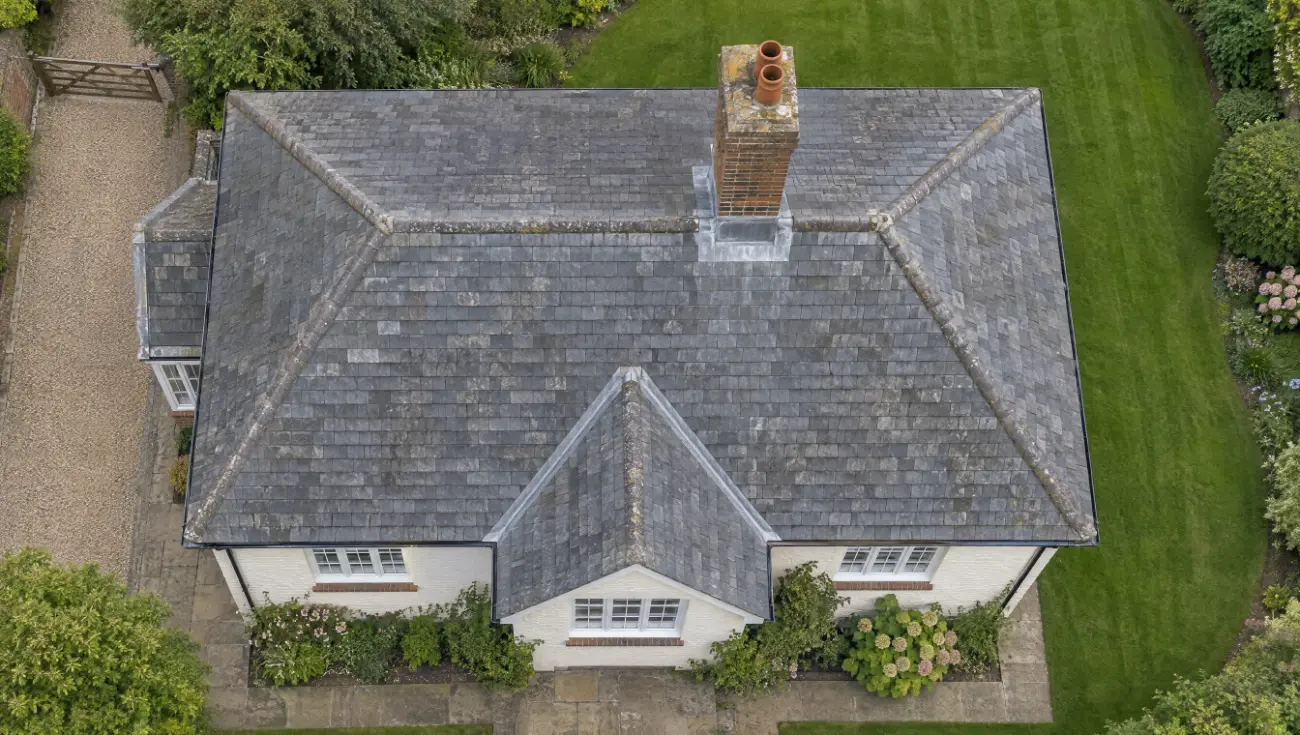
- PointingEroded, two faces
- FlashingLifted at the back
- PotsSound
 9.93/1010-year written guaranteeFree drone and CCTV surveysLeaks treated as a priority
When a chimney needs repairs.
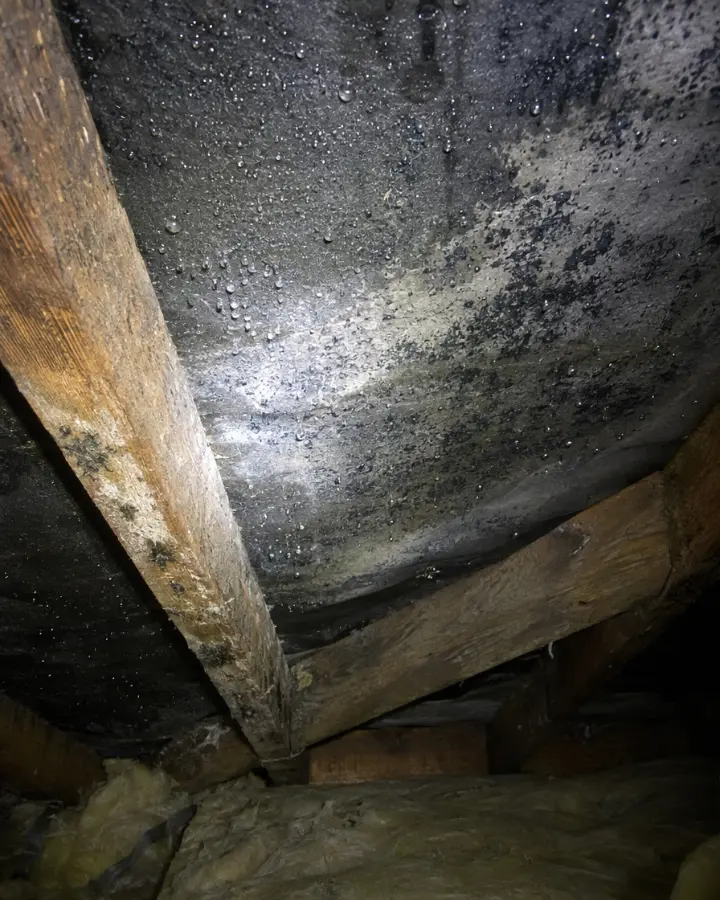
- Damp on the chimney breastStains on the wall or ceiling beside the chimney.
- Crumbling pointingMortar washed out between the bricks.
- Lifted lead flashingLead pulled away where the stack meets the roof.
- Cracked flaunchingThe mortar cap around the pots has split.
- Leaning stackA chimney out of line needs looking at soon.
- Loose potsPots that rock or have cracked in frost.
What we do on chimneys.
Raked out and repointed, damaged bricks and flaunching renewed.
New stepped flashing, soakers and back gutters, dressed to the roof.
Pots capped if unused, or a redundant stack taken down.
From survey to sealed chimney.
- 1SurveyDrone photos
All four faces of the stack, the pots and the lead.
- 2QuoteWritten price
What needs doing, and what can be left.
- 3WorkRepaired safely
From scaffold or a tower, never from a ladder.
- 4HandoverPhotos
Before and after, so you can see the work.
Chimney repairs and leadwork explained.
A chimney stands above the roof and takes the worst of the weather on every side. Over the years rain washes out the mortar, frost cracks the bricks and the cap, and the lead that seals the stack to the roof lifts or splits. Water then gets in around the chimney and shows as damp on the chimney breast, the ceiling beside it or in the loft.
Because it is hard to see the top of a chimney from the ground, problems often go unnoticed for years. Our drone survey photographs all four faces of the stack, the pots, the flaunching and the lead up close, so you can see exactly what is wrong before any scaffold goes up.
Lead flashing.
Lead is still the standard material for sealing a chimney or a wall to a roof, because it can be shaped to fit and lasts for decades when it is fitted well. Most leaks come from old lead that has lifted, cracked or been sealed over with mastic instead of being renewed. We replace the stepped flashing, the soakers under the tiles and the back gutter behind the stack, and dress it properly to the roof.
Leadwork is also used around roof windows, dormers, bay roofs and valleys, and we repair or renew it in all of those places. If the survey shows lead has been stolen or replaced with a cheap substitute that has failed, we will show you that too.
Repairing or removing a chimney.
Most chimneys only need repointing, new flaunching and new lead to stay sound. If a chimney is no longer used, capping the pots with a vented cap keeps rain out while letting air through to stop condensation inside the flue.
Sometimes a redundant stack is better taken down below the roof line and the roof made good. Chimneys are often shared with a neighbour, and in a conservation area or on a listed building removal may need permission, so we flag what needs checking before quoting.
What affects the cost of chimney repairs.
We quote after the survey. These are the main factors.
- Access and scaffold
- Chimney work is done from a safe platform.
- Height and size
- A single flue stack or a large shared one.
- What it needs
- Pointing, flaunching, pots, lead or rebuilding.
- Shared stacks
- Whether a neighbour shares the chimney and the cost.
 out of 10 · 5 reviews
Highly recommend. Fast responsive professional and respectful, I would definitely use again. Thank you
Finished jobs, with the photos.
Chimney and leadwork questions.
Anything else, just call. You'll speak to someone who knows roofs.
Call us07888 868356Why is there damp on my chimney breast?
Common causes are worn pointing on the stack, cracked flaunching around the pots, lifted lead flashing, or rain getting down an uncapped flue. Condensation in an unused flue can also cause damp patches. A drone survey shows the outside of the stack up close, which usually tells us which cause it is before any scaffold goes up.
Can lead flashing be repaired, or does it need replacing?
A small split or a piece that has lifted can sometimes be refixed. Lead that has cracked along its length, has been covered in mastic, or is very old is better replaced. New lead, properly dressed to the roof, lasts for decades. We show you the photos and recommend the option that will last.
Do I need my neighbour's permission for chimney repairs?
If the chimney is shared, it is good practice to speak to your neighbour first, and the Party Wall Act may apply to some work. Many neighbours are happy to share the cost because the repair protects both homes. We can give you the photos and the written quote to show them.
Should I cap a chimney I no longer use?
Usually, yes. A vented cap keeps rain and birds out while letting air move through the flue, which helps prevent damp inside. It is important not to seal a flue completely, and to keep it vented at the bottom too. If you might use the fireplace again, a cap can be removed later.
Where this information comes from.
General information, not legal, financial or mortgage advice. Lender, insurer and council rules vary and change, so check with them or a qualified adviser.
You might also need.
See the top of your chimney for free.
A drone survey shows the stack, the pots and the lead up close.